

Industrial Valves Guide: Types & Applications | PMI
Every piping system needs a way to start, stop, or control the flow moving through it. That's the job of a valve. It sounds simple, but the type of valve you choose, and how it's operated, has a direct impact on safety, efficiency, and how much maintenance a system needs down the line.
At Platinum Metals Industries LLC (PMI), valves are one of our core product categories, supplied to oil & gas, marine, manufacturing, and processing clients. Here's a look at the main valve types, the difference between manual and actuated valves, and how to think through choosing the right one for a given application.
What Does a Valve Actually Do?
A valve regulates the flow of liquid, gas, or slurry through a pipeline. That can mean fully stopping flow, allowing it to pass freely, or adjusting it somewhere in between. Some valves are built purely for on/off control. Others are designed to throttle flow precisely, or to prevent it from reversing direction.
The right valve depends on what the system actually needs it to do. A valve meant for emergency shutoff doesn't need the same design as one meant for fine-tuned flow control in a chemical process.
Common Types of Industrial Valves
Gate valves are built for simple on/off control. They use a sliding gate to block or allow flow, and they're a common choice when full flow with minimal pressure drop matters more than precise control. They're not ideal for frequent operation, since the gate mechanism wears faster with constant use.
Ball valves use a rotating ball with a hole through the center. A quarter turn opens or closes the valve, which makes them fast to operate and reliable for repeated use. They're a popular choice across oil & gas and general industrial piping.
Globe valves are designed for regulating flow rather than just stopping or starting it. Their internal design creates more pressure drop than a gate valve, but they offer much better control over flow rate, which matters in systems where precision is the priority.
Check valves allow flow in one direction only, automatically closing if flow tries to reverse. These are essential wherever backflow could damage equipment or contaminate a system, such as after a pump.
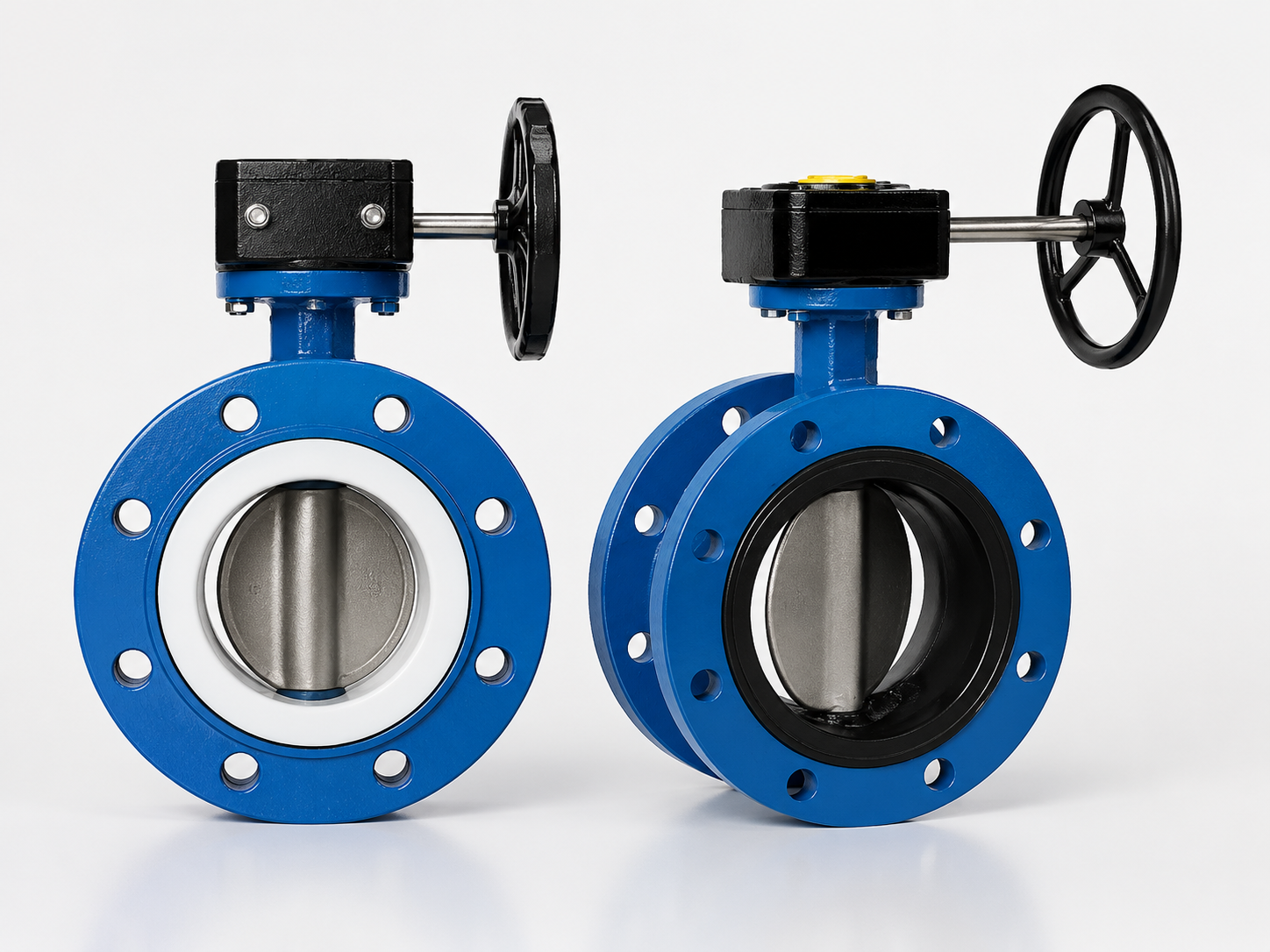
Butterfly valves use a rotating disc to control flow and are valued for being lightweight, compact, and quick to operate. They're common in large-diameter piping where a smaller, lighter valve is easier to install and maintain than a heavier gate or globe valve.
Actuated valves are any of the above valve types fitted with an actuator, allowing them to be opened or closed automatically rather than by hand. These are covered in more detail below.
Manual Valves vs Actuated Valves
The biggest operational decision in valve selection often isn't the valve type itself, but how it's operated.
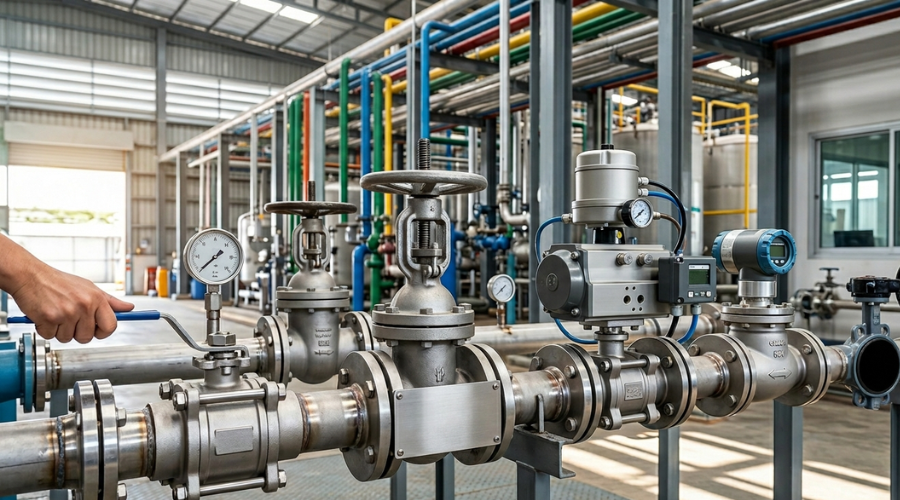
Manual valves are opened and closed by hand, using a handwheel, lever, or gear mechanism. They're simpler, cheaper, and require no power source or control system. For applications where a valve is adjusted infrequently, or where a human operator is already on-site and able to respond, manual valves are often the more practical and cost-effective option.
Actuated valves use an electric, pneumatic, or hydraulic actuator to open and close automatically, either on a timer, in response to a sensor, or through a remote control system. This matters most in applications where speed of response is critical, where the valve needs to be operated remotely, or where the location is hazardous or difficult for a person to access regularly.
In practice, the choice usually comes down to a few factors. How often does the valve need to be operated? Does it need to respond automatically to changing conditions, such as a pressure spike or emergency shutdown signal? Is the valve located somewhere that's hard to reach, underwater, at height, or in a hazardous zone? And does the project budget support the added cost and complexity of an actuator and its control system?
For critical safety shutoffs, remote pipeline sections, or processes that need rapid automated response, actuated valves are generally worth the investment. For straightforward, infrequently adjusted applications with easy operator access, manual valves often do the job just as well at a fraction of the cost.
Material Matters as Much as Valve Type
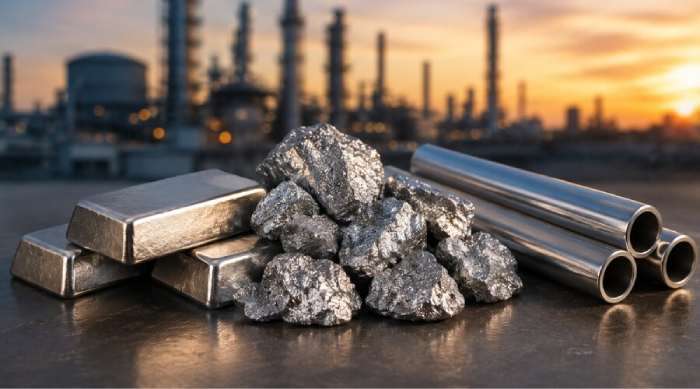
Valve performance isn't only about mechanical design. The material a valve is made from determines how well it holds up against the substance passing through it. Stainless steel valves are a common choice where corrosion resistance is important, particularly in marine or chemical environments. For more demanding conditions involving extreme heat, pressure, or highly corrosive media, valves built from nickel-based alloys are often the more reliable option, since standard stainless steel can fall short in these environments over time.
Choosing the wrong material is one of the most common causes of premature valve failure, even when the valve type itself was correctly selected for the application.
Why Quality and Testing Matter in Valve Selection
A valve that fails in the field rarely fails because of the design alone. More often, it's a manufacturing defect, an incorrect material grade, or inadequate pressure testing that didn't get caught before installation. For industries like oil & gas, where a valve failure can mean a leak or a safety incident, sourcing from a supplier who verifies material composition and conducts proper testing isn't optional.
Working with a supplier that provides material certification and uses verification methods like XRF testing gives buyers confidence that the valve they're installing will actually perform as specified, not just look correct on paper.
The Bottom Line
Choosing the right valve comes down to understanding what the system actually needs: the type of flow control required, how often the valve will be operated, whether automation makes sense, and what material will hold up best in the operating environment. Getting these decisions right upfront saves on maintenance costs and reduces the risk of failure down the line.
Platinum Metals Industries LLC supplies a full range of industrial valves alongside pipes, tube fittings, and flanges, backed by ISO certification, XRF testing, and more than 15 years supplying industries across 30+ countries. If you're sourcing valves for an upcoming project, get in touch with our team to talk specs and request a quote.